We didn't build a demo. We ran a business on agents.
ClonePop was a live e-commerce company where AI agents did the operational work: they sourced and merchandised the products, ran the paid advertising, and sold to customers. A real store on a production stack, taking real card payments from real people.
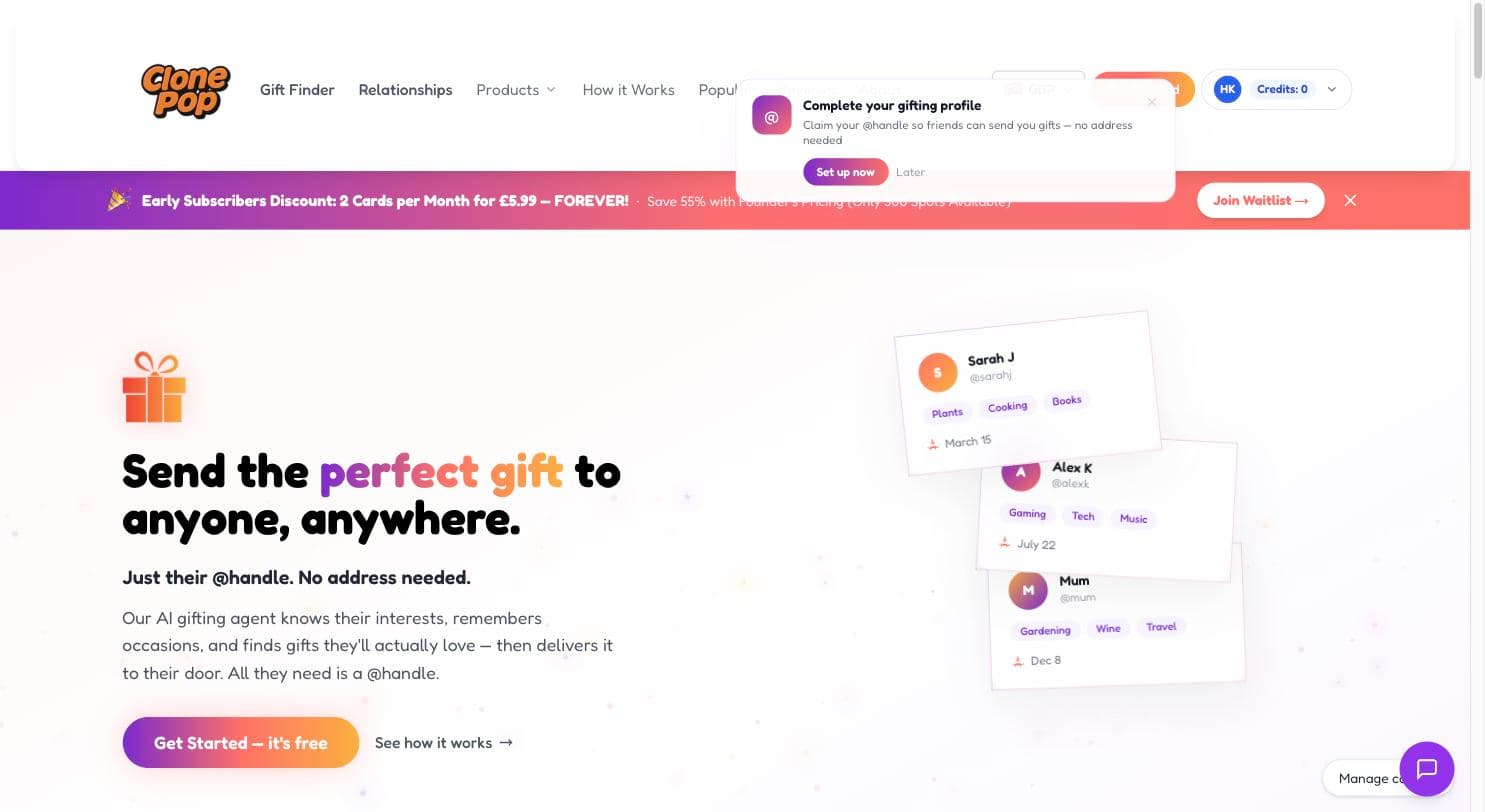
Three parts of the business ran on agents, in production.
Not a chatbot bolted onto a store. Agents that made decisions, spent an advertising budget, and handled customers' money, with the monitoring and guardrails that requires.
Product operations
An autonomous agent ran on a schedule every six hours. It searched a supplier catalogue of over a million products, scored each candidate on price, margin, image quality and reviews, added the ones that cleared a quality bar, and pulled anything whose ratings dropped too low. It built and maintained the catalogue on its own, the kind of work that normally sits with a merchandising team.
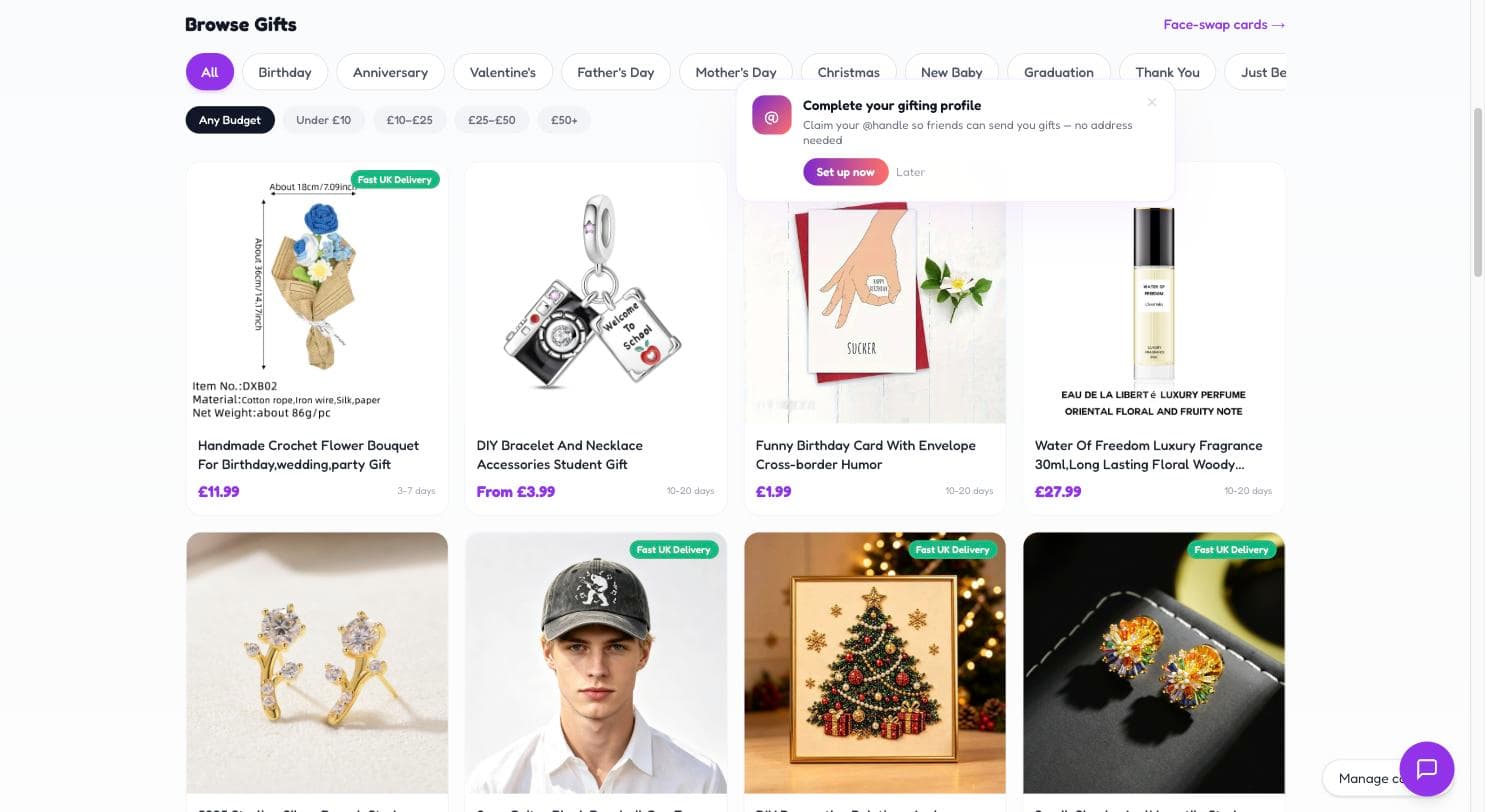
Advertising
Campaign management ran through the Meta Ads API under agent control: building campaigns and ad sets, pushing creative, and reading performance back, driven from the terminal rather than clicked through a dashboard by hand. Conversion tracking was wired end to end and audited, with purchase events firing and deduplicated across Stripe and Apple Pay.
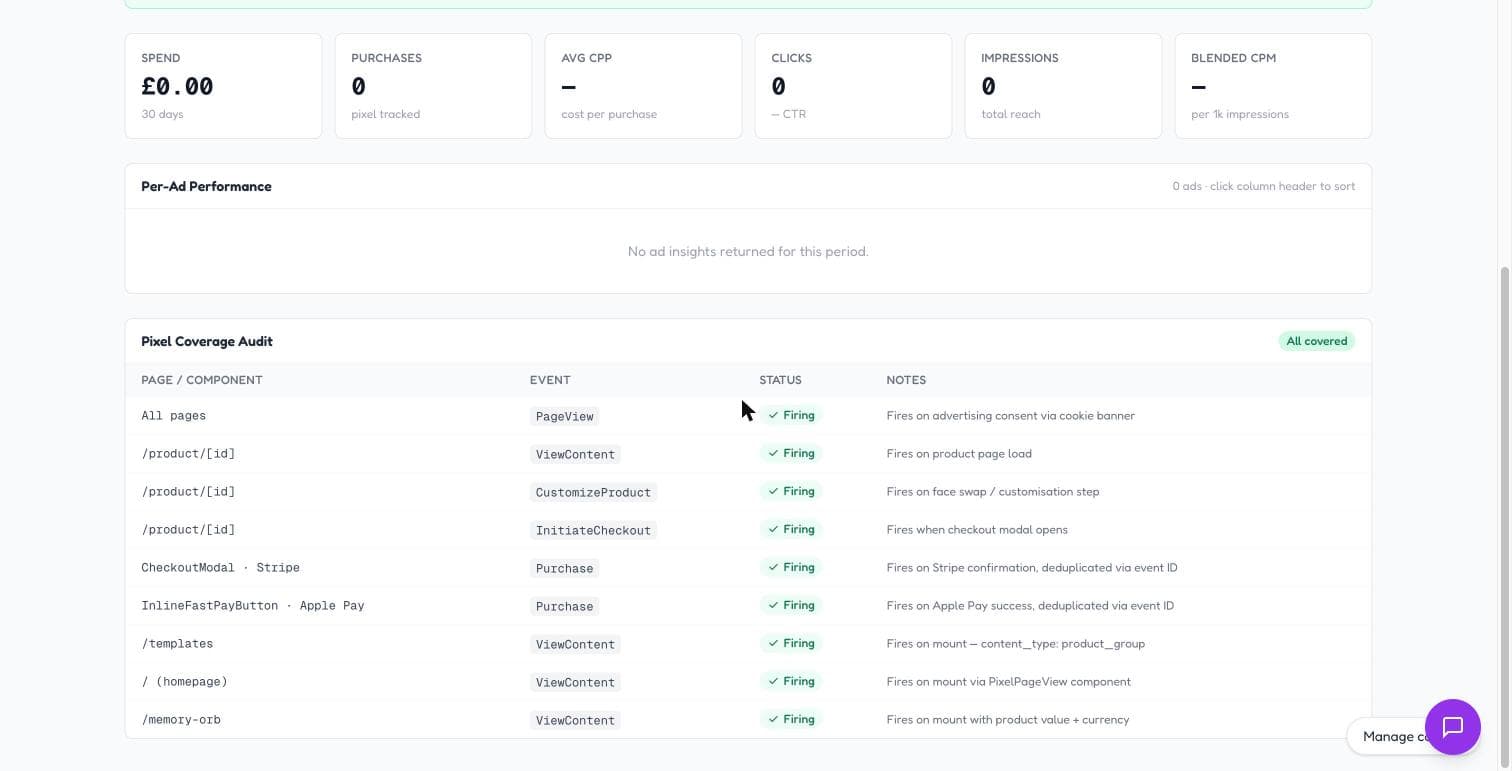
Sales
A customer-facing agent with twenty tools answered product questions, recommended gifts based on what it knew about the recipient, and took payment through Stripe inside the same conversation. It ran a real discovery chat, returned a personalised recommendation cross-sold across product tiers, and offered to save the recipient's birthday for a reminder the following year.
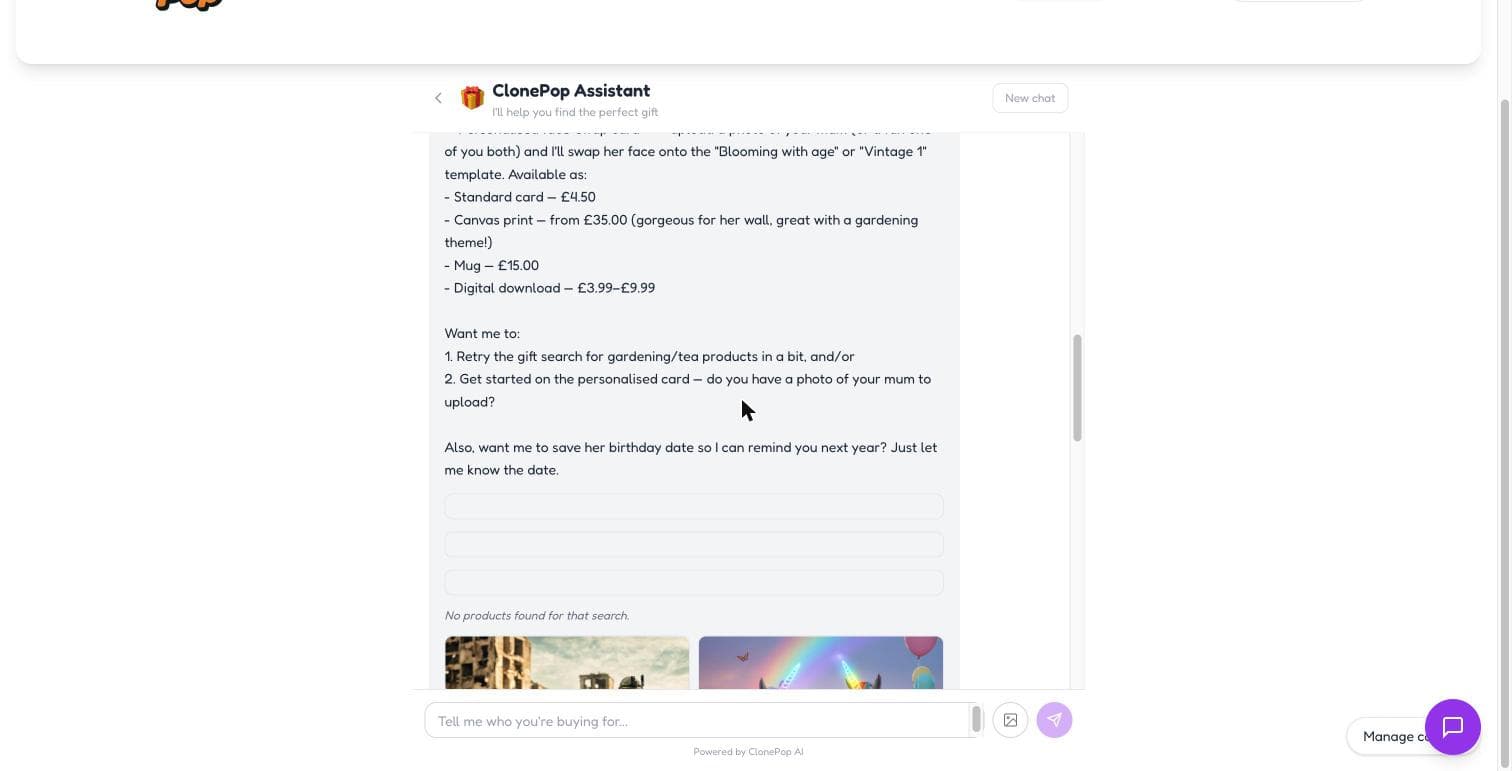
A production stack, built and shipped in-house.
Web and mobile clients, three agents, a serverless backend, and live payment, fulfilment, email and measurement integrations. Around 700 real orders were processed through it.

The same capability, pointed at your operation.
Most AI pitches show a chatbot. This was different: agents that ran real operations, made decisions, spent a budget, and handled customers' money in production.
That is what Firswood brings to a retainer. We build agents that run a workflow from end to end, on infrastructure we own and operate, and we keep them running. We build and run; we do not build and hand over.
Firswood paused ClonePop as a commercial decision about that particular market. The platform, and what it proves about building and running production agents, is what carries over.
What could agents run in your business?
If a workflow is repetitive, rules-based, and eating your team's time, it is a candidate. Let's find the first one.
Book a call